Local conditions
Canal Estates, Salt Wind and Tight Lots: Stump Removal in Mooloolaba
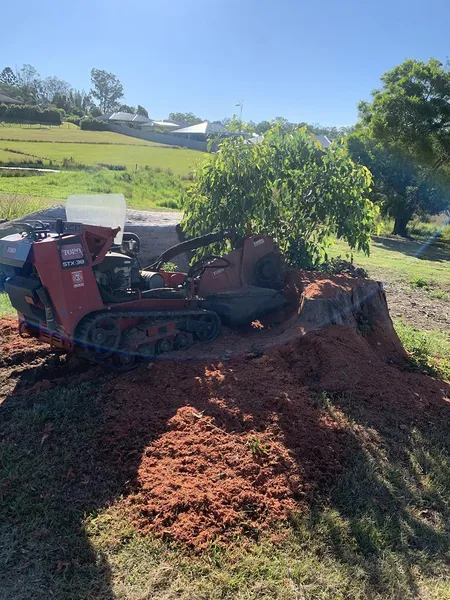
Mooloolaba's built form is unusual even by Sunshine Coast standards. Beyond the Esplanade strip and the Spit, much of the suburb consists of canal estates dredged and filled from the Mooloolah River floodplain during the 1960s and 70s, laid out with narrow waterfront lots so that as many houses as possible got a berth. The result is a suburb of small, flat, fully built-out blocks with minimal setbacks, high fences and, very often, a single mature tree squeezed into a courtyard. Stump grinding in Mooloolaba is therefore almost always a confined-space job.
The ground is engineered rather than natural: sandy dredge fill over river sediment, free-draining, with the canal water table close beneath. Trees planted into that fill spread wide and shallow to anchor themselves, so root plates commonly extend under paving, pool surrounds and up to revetment walls. Salt-laden onshore wind then favours a narrow palette, cocos palms, Norfolk pines, pandanus, umbrella trees and tuckeroos, and stresses their structure, which is why storm limb failure is common along the waterfront.
Why it matters to owners: roots against a revetment wall or pontoon footing can't be attacked without thought, since undermining either is expensive; loose fill collapses into a grind hole and settles later under new turf or pavers; and in a canal system, grindings that wash off site become a water-quality issue, not just a mess. Add tourism, and there's a scheduling dimension, grinding beside a full holiday let on a Saturday afternoon isn't an option.
We work to that reality. Access is measured before quoting, machines are chosen to fit the tightest gate, work zones are screened so material stays on site, holes are backfilled and compacted against later subsidence, and grinding near revetment walls stops at the point where we'd be compromising the structure, with that limit explained up front, not afterwards.